

Professor Robert Winston presents his top ten scientific breakthroughs of the past 50 years. Tracing these momentous and wide-ranging discoveries, he meets a real-life bionic woman, one of the first couples to test the male contraceptive pill, and even some of his early IVF patients. He explores the origins of the universe, probes the inner workings of the human mind and sees the most powerful laser in the world.
- TV-Recordings
- Medical Sciences
- Physics
- TV-Recordings
- No subtitles
- 60
Professor Robert Winston presents his top ten scientific breakthroughs of the past 50 years. Tracing these momentous and wide-ranging discoveries, he meets a real-life bionic woman, one of the first couples to test the male contraceptive pill, and even some of his early IVF patients. He explores the origins of the universe, probes the inner workings of the human mind and sees the most powerful laser in the world.
-
Human Universe - 01: Apeman - Spaceman
-
Brian Cox
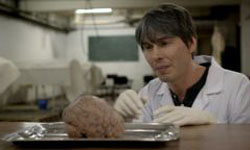
Beginning in Ethiopia, Professor Brian Cox discovers how the universe played a key role in our ascent from apeman to spaceman by driving the expansion of our brains. But big brains alone did not get us to space.
- TV-Recordings
- English subtitles
- 60
Beginning in Ethiopia, Professor Brian Cox discovers how the universe played a key role in our ascent from apeman to spaceman by driving the expansion of our brains. But big brains alone did not get us to space.

-
Human Universe - 02: Why Are We Here?
-
Brian Cox
Brian Cox reveals how the wonderful complexity of nature and human life is simply the consequence of chance events constrained by the laws of physics that govern our universe. But this leads him to a deeper question - why does our universe seem to have been set up with just the right rules to create us?
- TV-Recordings
- English subtitles
- 60
Brian Cox reveals how the wonderful complexity of nature and human life is simply the consequence of chance events constrained by the laws of physics that govern our universe. But this leads him to a deeper question - why does our universe seem to have been set up with just the right rules to create us?
Professor Brian Cox explores our origins, place and destiny in the universe. We all start our lives thinking that we are at the centre of the universe, surrounded by our family and the world as it spins around us. But the urge to explore is strong.
- TV-Recordings
- English subtitles
- 60
Professor Brian Cox explores our origins, place and destiny in the universe. We all start our lives thinking that we are at the centre of the universe, surrounded by our family and the world as it spins around us. But the urge to explore is strong.
-
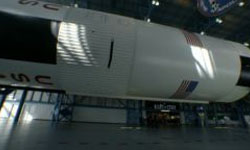
Human Universe - 05: What is our Future?
-
Brian Cox
What is our future/destiny?
- TV-Recordings
- English subtitles
- 60
What is our future/destiny?
-
Human Universe Series 1
-
Brian Cox
Professor Brian Cox explores the most precious, most wonderful thing in the universe, us.
- TV-Recordings
- English subtitles
- 300
Professor Brian Cox explores the most precious, most wonderful thing in the universe, us.
-
Hunt vs Lauda: F1's Greatest Racing Rivals
-
Matthew Whiteman
James Hunt has never been equalled. Could swashbuckling Hunt catch the scientific Lauda? Could Niki overcome an appalling crash to come back from the dead and fight James all the way to the last race of the season?
- TV-Recordings
- Sport
- English subtitles
- 60
James Hunt has never been equalled. Could swashbuckling Hunt catch the scientific Lauda? Could Niki overcome an appalling crash to come back from the dead and fight James all the way to the last race of the season?

-
La fabuleuse histoire de la science
-
BBC , 2011
How we came to understand our planet was not at the centre of everything in the cosmos.
- TV-Recordings
- No subtitles
- No
How we came to understand our planet was not at the centre of everything in the cosmos.
The story of how power has been harnessed from wind, steam and from inside the atom.
- TV-Recordings
- No subtitles
- 60
The story of how power has been harnessed from wind, steam and from inside the atom.

Michael Mosley tells how scientists came to explain the diversity of life on earth.
- TV-Recordings
- No subtitles
- 60
Michael Mosley tells how scientists came to explain the diversity of life on earth.
How we came to understand our planet was not at the centre of everything in the cosmos.
- TV-Recordings
- No subtitles
- 60
How we came to understand our planet was not at the centre of everything in the cosmos.
How atomic theories and concepts of quantum physics underpin modern technology.
- TV-Recordings
- No subtitles
- 60
How atomic theories and concepts of quantum physics underpin modern technology.
-
Marie Curie, au-delà du mythe
-
Arte , 2011
Intimate portrait of the scientist and Nobel Prize winner.
- TV-Recordings
- English subtitles
- 60
Intimate portrait of the scientist and Nobel Prize winner.
-
Men of Rock
-
BBC
Geologist Iain Stewart retraces the steps of a band of maverick pioneers who made ground-breaking discoveries in the landscape of Scotland about how our planet works.
- TV-Recordings
- No subtitles
- 180
Geologist Iain Stewart retraces the steps of a band of maverick pioneers who made ground-breaking discoveries in the landscape of Scotland about how our planet works.
Iain Stewart follows in the footsteps of the founding father of geology, James Hutton. This Scottish rogue was a profound and original thinker who, 250 years ago, overturned ancient beliefs about how and when the world was formed. His ideas clashed with those of the most eminent scientist of his day. Lord Kelvin was determined to prove Hutton wrong.
- TV-Recordings
- Geology
- History
- TV-Recordings
- No subtitles
- 60
Iain Stewart follows in the footsteps of the founding father of geology, James Hutton. This Scottish rogue was a profound and original thinker who, 250 years ago, overturned ancient beliefs about how and when the world was formed. His ideas clashed with those of the most eminent scientist of his day. Lord Kelvin was determined to prove Hutton wrong.
Iain finds out how gung-ho geologist Edward Bailey discovered Scotland was once home to super volcanoes. And how unsung hero Arthur Holmes solved the mystery of what makes continents move across the surface of the globe.
- TV-Recordings
- Geography
- Geology
- TV-Recordings
- No subtitles
- 60
Iain finds out how gung-ho geologist Edward Bailey discovered Scotland was once home to super volcanoes. And how unsung hero Arthur Holmes solved the mystery of what makes continents move across the surface of the globe.

In the final episode, Iain finds out about daredevil scientist Louis Agassiz, who first imagined the world had been gripped by an ice age. Plus, the story of humble janitor James Croll, who used the planets to work out the natural rhythms of the earth\'s climate.
- TV-Recordings
- Geography
- Geology
- TV-Recordings
- No subtitles
- 60
In the final episode, Iain finds out about daredevil scientist Louis Agassiz, who first imagined the world had been gripped by an ice age. Plus, the story of humble janitor James Croll, who used the planets to work out the natural rhythms of the earth\'s climate.

-
Mythe Einstein - la vie et l'œuvre d'un rebelle
-
Sylvia Strasser Wolfgang Würker , 2015
Who was this man who embodies like no other triumph and tragedy of the 20th century? And what he has to say to us today? "Myth Einstein" embarks on a journey through the life of the physicist and feel the true and invented stories about the genius after.
- TV-Recordings
- No subtitles
- 90
Who was this man who embodies like no other triumph and tragedy of the 20th century? And what he has to say to us today? "Myth Einstein" embarks on a journey through the life of the physicist and feel the true and invented stories about the genius after.

-
Mythos Einstein - Leben und Werk eines Rebellen
-
Sylvia Strasser, Wolfgang Würker , 2015
Albert Einstein ist ein Popstar der Wissenschaft, um den sich etliche Legenden ranken. Erst posthum treten mit der Herausgabe privater Dokumente die nicht nur strahlenden Seiten des Jahrhundert-Genies ans Licht. Wer war dieser Mann, der wie kein anderer Triumph und Tragik des 20. Jahrhunderts verkörpert hat? Und was hat er uns heute noch zu sagen? "Mythos Einstein" begibt sich auf eine Reise durch das Leben des Physikers und spürt den wahren und erfundenen Geschichten um das Genie nach.
- TV-Recordings
- No subtitles
- 90
Albert Einstein ist ein Popstar der Wissenschaft, um den sich etliche Legenden ranken. Erst posthum treten mit der Herausgabe privater Dokumente die nicht nur strahlenden Seiten des Jahrhundert-Genies ans Licht. Wer war dieser Mann, der wie kein anderer Triumph und Tragik des 20. Jahrhunderts verkörpert hat? Und was hat er uns heute noch zu sagen? "Mythos Einstein" begibt sich auf eine Reise durch das Leben des Physikers und spürt den wahren und erfundenen Geschichten um das Genie nach.
-
Precision: The Measure of All Things
-
BBC
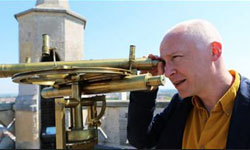
Professor Marcus du Sautoy explores why we are driven to measure and quantify the world around us and why we have reduced the universe to just a handful of fundamental units of measurement.
- TV-Recordings
- No subtitles
- 180
Professor Marcus du Sautoy explores why we are driven to measure and quantify the world around us and why we have reduced the universe to just a handful of fundamental units of measurement.
Professor Marcus du Sautoy explores why we are driven to measure and quantify the world around us and why we have reduced the universe to just a handful of fundamental units of measurement. The story of the metre and the second.
- TV-Recordings
- Maths
- No subtitles
- 60
Professor Marcus du Sautoy explores why we are driven to measure and quantify the world around us and why we have reduced the universe to just a handful of fundamental units of measurement. The story of the metre and the second.
Deep underground in a vault beneath Paris lives the most important lump of metal in the world - Le Grand K. Created in the 19th century, it's the world's master kilogramme, the weight on which every other weight is based. But there is a problem with Le Grand K - it is losing weight. Professor Marcus du Sautoy explores the history of this strange object and the astonishing modern day race to replace it
- TV-Recordings
- Maths
- No subtitles
- 60
Deep underground in a vault beneath Paris lives the most important lump of metal in the world - Le Grand K. Created in the 19th century, it's the world's master kilogramme, the weight on which every other weight is based. But there is a problem with Le Grand K - it is losing weight. Professor Marcus du Sautoy explores the history of this strange object and the astonishing modern day race to replace it
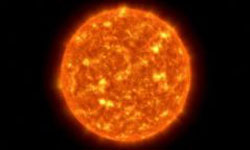
From lightning bolts and watt engines to electromagnetic waves and single electrons, Professor Marcus du Sautoy continues his journey into the world of measurement as he reveals how we came to measure and harness the power of heat, light and electricity.
- TV-Recordings
- Maths
- No subtitles
- 60
From lightning bolts and watt engines to electromagnetic waves and single electrons, Professor Marcus du Sautoy continues his journey into the world of measurement as he reveals how we came to measure and harness the power of heat, light and electricity.
-
Royal Institution Christmas Lectures 2012
-
BBC
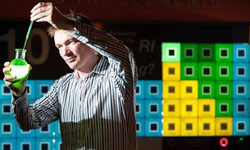
Series of lectures on a single topic, presenting scientific subjects to a general audience in an informative and entertaining manner
- TV-Recordings
- English subtitles
- 180
Series of lectures on a single topic, presenting scientific subjects to a general audience in an informative and entertaining manner

The medieval alchemists made elements react to create magnificent shows, enthralling kings and commoners alike, but their secrets were never revealed until now.
- TV-Recordings
- Chemistry
- TV-Recordings
- No subtitles
- 60
The medieval alchemists made elements react to create magnificent shows, enthralling kings and commoners alike, but their secrets were never revealed until now.

-
Royal Institution Christmas Lectures 2012 - The Modern Alchemist: 02 - Water: The Fountain of Youth
-
BBC
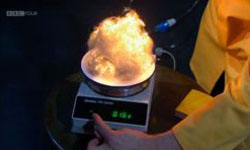
In the second of this year's Christmas Lectures, Dr Peter Wothers drinks from the fountain and finds out whether the elements lurking in the water can restore his youth. Along the way he discovers how exploding balloons could solve the energy crisis, how water contains the remains of the most violent reactions on Earth and that the real secret to eternal youth might be drinking no water at all.
- TV-Recordings
- Chemistry
- TV-Recordings
- No subtitles
- 60
In the second of this year's Christmas Lectures, Dr Peter Wothers drinks from the fountain and finds out whether the elements lurking in the water can restore his youth. Along the way he discovers how exploding balloons could solve the energy crisis, how water contains the remains of the most violent reactions on Earth and that the real secret to eternal youth might be drinking no water at all.
-
Royal Institution Christmas Lectures 2012 - The Modern Alchemist: 03 - The Philosopher's Stone
-
BBC 4
In the final Christmas Lecture, Dr Peter Wothers explores the elements within the earth and discovers just how difficult it is for chemists to extract the planet's greatest treasures. He discovers how our knowledge of the elements can allow us to levitate, turn carbon dioxide into diamonds and maybe turn lead into gold.
- TV-Recordings
- TV-Recordings
- No subtitles
- 60
In the final Christmas Lecture, Dr Peter Wothers explores the elements within the earth and discovers just how difficult it is for chemists to extract the planet's greatest treasures. He discovers how our knowledge of the elements can allow us to levitate, turn carbon dioxide into diamonds and maybe turn lead into gold.
-
Science Britannica
-
BBC
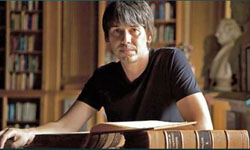
Professor Brian Cox introduces Britain's science heroes.
- TV-Recordings
- English subtitles
- 180
Professor Brian Cox introduces Britain's science heroes.

-
Science Britannica - Episode 1 : Frankenstein's Monsters
-
Professor Brian Cox
Professor Brian Cox guides viewers through 350 years of British science to reveal what science really is, who the people are who practise it, and how it is inextricably linked to the past, present and future of each and every one of us.
- TV-Recordings
- General Science
- English subtitles
- 60
Professor Brian Cox guides viewers through 350 years of British science to reveal what science really is, who the people are who practise it, and how it is inextricably linked to the past, present and future of each and every one of us.

-
Science Britannica - Episode 2 : Method and Madness
-
Professor Brian Cox
This time, Professor Cox celebrates Britain's pivotal role in creating modern science. From performing Isaac Newton's iconic light experiment to meeting a wartime code breaker and making hydrogen explosions, Professor Cox leads the way through 300 years of British history.
- TV-Recordings
- General Science
- English subtitles
- 60
This time, Professor Cox celebrates Britain's pivotal role in creating modern science. From performing Isaac Newton's iconic light experiment to meeting a wartime code breaker and making hydrogen explosions, Professor Cox leads the way through 300 years of British history.